Empiricism
Definition
Empiricism describes any philosophy which claims that all knowledge originates in experience, denying the validity of both deductive reasoning and divine revelation.
Keywords: Empiricism, Philosophy, Knowledge, Experience, False, Contradictory.
Veracity
Empiristic claims are false .
Proof
Any worldview that does not allow for its own foundation is deductively false.
Premise 1: Empricism is false if one must have prior knowledge to make sense of experiences.
Premise 2: One must have the prior knowledge of universal non-contradiction to make sense of experiences.
Conclusion: Therefore, empiricism is false.
Empiristic claims, when adhered to, deny the possibility of making sense of experiences, all the while claiming that making sense of experiences is the only way to know things. This contradictory denial of knowledge makes empiricism deductively false.
See also
Atheism

Gilbert Guttlebocker, Defender of Dragons
Riveting, yet absurd; romantic, yet innocent; Gilbert Guttlebocker, Defender of Dragons is a little Roald Dahl, a little Harry Potter, and a little Chronicles of Narnia, all rolled into one. Timothy McCabe collaborates with the great Benedict Ballyhoot to bring you the novel of the century!
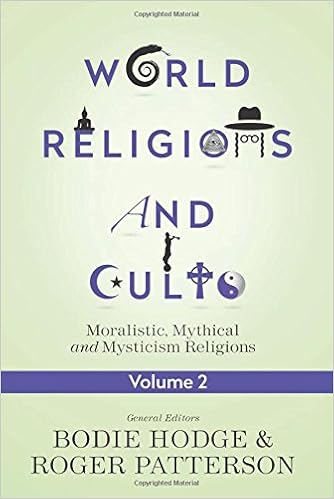
In Printed Form
Along with numerous other authors including Don Landis, Bodie Hodge and Roger Patterson, Timothy McCabe contributes analyses of various world religions and cults in this volume from Master Books.
Other Writings
"Why Pray? If it changes God's mind then he is not sovereign. If it does not change God's mind then it is pointless."
First of all, prayer is much more than just petitioning God or asking Him to do things. Instead, it is both an opportunity to build a relationship with the God of creation, and also an outpouring of that relationship. In Jesus's model prayer, known as the Lord's prayer, found in Matthew 6 and Luke 11, Jesus both begins and ends by praising the Father. He states His complete commitment to Him and dependence upon Him.
Continue reading...
"In Romans 1:23, God clearly says "you have brought down the image of the uncorruptible God to corruptible man". How then can you call Jesus God?"
This question is a continuation of an earlier question, linked to at the bottom of my answer. The question was asked in several parts, so I have compiled all of the questions together here, and will answer them all at once. In full, the questioner asks: "You mentioned that Jesus has two seperate identities. How? Did not Jesus say that he was 'the son of man'?
Continue reading...
"Who founded or discovered your worldview?"
Christian doctrine has been gradually developed over several millennia since the time of the very first people. However, since the time of Jesus of Nazareth, also called Jesus Christ, and his immediate followers, approximately 2000 years ago, essential Christian doctrine has not changed at all. Thus, fully developed Christian doctrine came through Jesus the Christ, the Son of God. It is from His title, "Christ", that we get the word "Christians".
Continue reading...