Rationalism
Definition
Rationalism describes any philosophy that claims that beliefs and opinions should always be logical, deductive conclusions rather than being based on experience, observations, religious teachings, or divine revelation.
Keywords: Rationalism, Philosophy, Logical, Reasoning, Deductive, Experience, Observations, Religious, Revelation, Contradictory.
Veracity
Rationalistic claims are false .
Proof
All self-refuting or contradictory claims are deductively false.
Premise 1: Only deductive conclusions should be believed.
Premise 2: Premise 1, being the foundation or starting point of the philosophy, is not itself a deductive conclusion.
Conclusion: Therefore, premise 1, also known as "rationalism", should not be believed.
Rationalistic claims, when adhered to, require the rejection of rationalistic claims. To accept them is to reject them, making rationalism inherently contradictory and deductively false.

Gilbert Guttlebocker, Defender of Dragons
Riveting, yet absurd; romantic, yet innocent; Gilbert Guttlebocker, Defender of Dragons is a little Roald Dahl, a little Harry Potter, and a little Chronicles of Narnia, all rolled into one. Timothy McCabe collaborates with the great Benedict Ballyhoot to bring you the novel of the century!
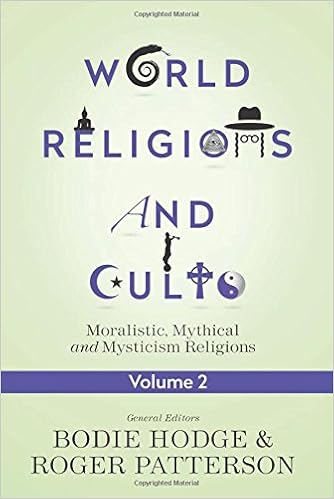
In Printed Form
Along with numerous other authors including Don Landis, Bodie Hodge and Roger Patterson, Timothy McCabe contributes analyses of various world religions and cults in this volume from Master Books.
Other Writings
"Is your worldview a "religion of peace"? If so, what does it mean to be a "peacemaker"?"
Christians worship the "Prince of Peace" (Isaiah 9:6), Jesus the Christ. Christ taught that peacemakers are blessed (Matthew 5:9). The apostle Paul, author of many of the books of the New Testament, begins his letters by saying things like "Grace to you and peace from God our Father and the Lord Jesus Christ" (Romans 1:7; 1 Corinthians 1:3; 2 Corinthians 1:2; Galatians 1:3; Ephesians 1:2, etc).
Continue reading...
"Does evolution (and with that, the evils that have occurred in the name of natural selection, prior to the fall of man) disprove the existence of God?"
In short, no. There is absolutely no evidence that evolution, in the sense in which this question is referring to it, has ever happened. Evidence of the lack of evidence includes the "theory" of Punctuated Equilibrium, developed by evolutionary paleontologists Niles Eldredge and Stephen Jay Gould. One of the celebrated functions of this theory is its demonstration of why, if evolution were actually true, there would be no fossil evidence for it.
Continue reading...
"I'd like to hear an explanation to any of these questions without referencing the bible. For those of us that don't believe I the inerrancy of that Bronze-aged text, it would be refreshing."
You want an authoritative Christian answer that doesn't appeal to Christianity's authority? Interesting idea. Let me think on it for a little bit... Hmmm... No. (Deuteronomy 6:6-9; Joshua 1:8, 23:6; 1 Kings 2:3; Psalm 1:2; Proverbs 7:1; Matthew 4:4-10; Mark 12:24; Luke 1:3, 10:26, 11:28, 16:29, 24:27; John 21:24; Acts 17:11, 18:28; 1 Corinthians 2:13, 14:37; Ephesians 6:17; 1 Thessalonians 2:13; 2 Timothy 3:16-17; Hebrews 4:12; 2 Peter 1:21; Revelation 1:3, 22:19)
Continue reading...