Theism
Definition
Theism includes any philosophy which claims that some kind of God or gods exist.
Keywords: Theism, Atheism, Philosophy, True, God, Deductive.
Veracity
Theistic claims are true .
Proof
Either there are no gods, and therefore atheistic claims are true, or there is at least one god, and therefore theistic claims are true.
Premise 1: If atheistic claims are false, then theistic claims are true.
Premise 2: Atheistic claims are false.
Conclusion: Therefore, theistic claims are true.
Since atheistic claims are deductively false, theistic claims are therefore deductively true.
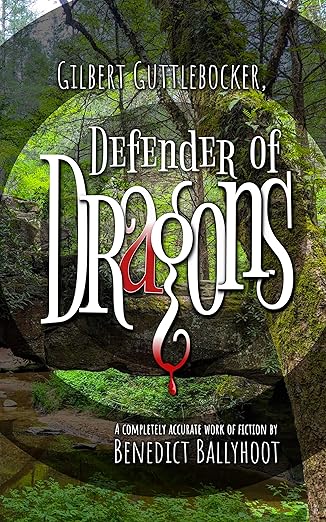
Gilbert Guttlebocker, Defender of Dragons
Riveting, yet absurd; romantic, yet innocent; Gilbert Guttlebocker, Defender of Dragons is a little Roald Dahl, a little Harry Potter, and a little Chronicles of Narnia, all rolled into one. Timothy McCabe collaborates with the great Benedict Ballyhoot to bring you the novel of the century!
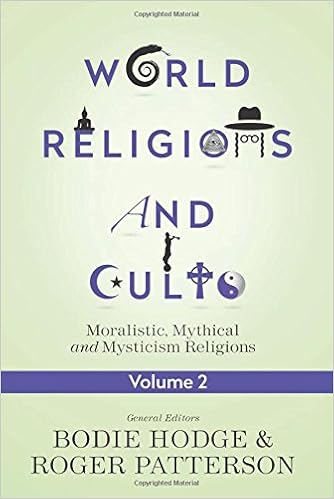
In Printed Form
Along with numerous other authors including Don Landis, Bodie Hodge and Roger Patterson, Timothy McCabe contributes analyses of various world religions and cults in this volume from Master Books.
Other Writings
"Why does religion 'permit' murder and why are people so eager to justify murders their people commited?"
The dictionary defines murder as "the killing of another human being under conditions specifically covered in law". I will, throughout this answer, use this definition as what I am referring to when I use the word "murder", and I will assume that this is the definition in view by the questioner. When humans deny their Creator, the God of the Bible, there is no longer any objective moral authority, or highest moral law.
Continue reading...
"Isaiah 7:20 says the Lord is going to be a barber and shave the hair off our legs. Is there any reason for this random stuff?"
Isaiah 7:20 (NASB) In that day the Lord will shave with a razor, hired from regions beyond the Euphrates (that is, with the king of Assyria), the head and the hair of the legs; and it will also remove the beard. This does seem like an odd verse when pulled out of its full context, but reading the entire passage in historical context and in light of the law of Moses, specifically Leviticus 14, the meaning becomes apparent.
Continue reading...
"In Genesis 9:11-13 It says God has a covenant that he will never submerge the world by flood again and his token of the covenant is the rainbow. But it is scientifically impossible for rainbows to have not existed before this. Please explain?"
To begin with, Genesis 9 does not claim that there were no rainbows before the flood of Noah. It simply says that from the time of Noah onward, the rainbow will be a sign of God's promise. However, it is certainly not impossible for there to have been no rainbows prior to the flood. The Bible states that prior to the creation of Man, the earth was watered by a fine mist that came up from it, and there was no rain yet.
Continue reading...