Monotheism
Definition
Monotheism refers to any philosophy which claims that there is only one supreme creator of the universe.
Keywords: Monotheism, Atheism, Polytheism, Theism, Philosophy, True, Deductive, Creator, Universe.
Veracity
Monotheistic claims are true .
Proof
Either there are no gods, and therefore atheistic claims are true, or there are many gods, and therefore polytheistic claims are true, or there is only one god, and therefore monotheistic claims are true.
Premise 1: If atheistic claims and polytheistic claims are both false, then monotheistic claims are true.
Premise 2: Both atheistic and polytheistic claims are false.
Conclusion: Therefore, monotheistic claims are true.
Since both atheistic and polytheistic claims are deductively false, monotheistic claims are therefore deductively true.

Gilbert Guttlebocker, Defender of Dragons
Riveting, yet absurd; romantic, yet innocent; Gilbert Guttlebocker, Defender of Dragons is a little Roald Dahl, a little Harry Potter, and a little Chronicles of Narnia, all rolled into one. Timothy McCabe collaborates with the great Benedict Ballyhoot to bring you the novel of the century!
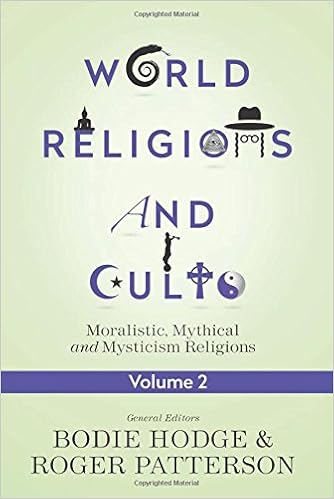
In Printed Form
Along with numerous other authors including Don Landis, Bodie Hodge and Roger Patterson, Timothy McCabe contributes analyses of various world religions and cults in this volume from Master Books.
Other Writings
"Aren't Allah, Brahman and Yahweh just different names for the same God?"
No. Allah is a generic Arabic term for an ultimate creator God, and could be applied by Arabic speaking peoples to any ultimate creator God, whether He be the God of the Sikhs, the Muslims, the Christians, or the Jews; while Yahweh is the personal name of the God of Christians or Jews only (roughly translated "THE EXISTING ONE"); and Brahman is the non-personal God specific to Hinduism and related religions.
Continue reading...
"Where is existence going (i.e. eschatology), both immediately and ultimately?"
The Bible states that no one is perfect but God alone (Luke 18:19). As a result, all of us have earned death and condemnation (Romans 6:23). However, in an amazing substitution, God Himself lived the perfect human life in our place, and paid our fine on the cross (2 Corinthians 5:21, Romans 5). Those of us who put our trust in the work He did in our place will be forgiven (Romans 4:5, John 3:18).
Continue reading...
"If, as you claim, morality is obeying god, how do you know that obeying god is good? Isn't that totally circular?"
If morality is obeying god, then obeying god is morality. If we grant the former, then the latter follows by tautological necessity. Is it circular? Insofar as tautologies are circular, sure. Here is another circular tautology: If 2 + 2 = 4, then 4 = 2 + 2. Totally circular. Malachi 3:18; Romans 4:15, 5:13; 1 John 3:4.
Continue reading...