Unitarianism
Definition
Unitarianism refers to any philosophy which claims that divine sovereignty is not shared in any way.
Keywords: Unitarianism, Philosophy, God, Irrational, False, Contradictory, Reality, Deductive, Universe, Time, Argument From Reason.
Veracity
Unitarian claims are false .
Proof
Simplified
Any worldview that denies an omniscient, sovereign, rational author of time and the universe allows for no possible rational justification for the assumption that reality is non-contradictory.
Premise 1: A rational, sovereign, omniscient author of time and the universe will, of necessity, eternally conceive of himself as his own ultimate reason for everything that occurs. The conception of himself will eternally be the exact representation of himself, sharing divine sovereignty, since this conception is the reason for everything that occurs.
Premise 2: Under unitarianism, divine sovereignty is not shared.
Conclusion: Therefore, under unitarianism, either there is no author of time and the universe; or else the author of time and the universe is not omniscient; or else the author of time and the universe is not sovereign; or else the author of time and the universe is not rational.
Humans assume that reality is non-contradictory. Under unitarianism, there can ultimately be no rational authority behind this assumption, making it an irrational assumption. This makes unitarianism deductively false.
In depth
Any worldview that denies an omniscient, sovereign, rational author of time and the universe allows for no possible rational justification for the assumption that reality is non-contradictory.
A. All things formed must be formed by reasoning causes for our beliefs about them to be rational.
Premise 1: Any belief formed by non-reasoning causes is believed without reason.
Premise 2: A belief about anything is caused in part by the existence of that thing.
Conclusion: Therefore, any belief about anything is believed without reason unless the existence of that thing is not formed by non-reasoning causes.
B. All things formed must ultimately be formed by only one reasoning cause for our beliefs about them to be rational.
Premise 1: In the convergence of multiple causes, the result is at least partly the result of the convergence of causes.
Premise 2: The convergence of multiple causes is not itself reasoning.
Conclusion: Therefore, any belief formed by the convergence of multiple ultimate causes is believed without reason.
C. God conceives of himself as his own reason.
Premise 1: If all things formed are formed by one reasoning cause (from B above), it itself is the only reason for them.
Premise 2: Anything that reasons, and has only one reason, conceives of that reason.
Conclusion: Therefore, if all things formed are formed by one reasoning cause, it conceives of it itself as the reason for them.
D. Divinity is shared in any rational god.
Premise 1: With a rational god, god's reason is god himself.
Premise 2: There is a distinction between the concept and the thing conceived of.
Conclusion: Therefore, with a rational god, divinity is shared between the concept and the thing conceived of.
Humans assume that reality is non-contradictory. Under unitarianism, there can ultimately be no rational authority behind this assumption, making it an irrational assumption.
This Argument from Reason demonstrates that unitarianism is deductively false.

Gilbert Guttlebocker, Defender of Dragons
Riveting, yet absurd; romantic, yet innocent; Gilbert Guttlebocker, Defender of Dragons is a little Roald Dahl, a little Harry Potter, and a little Chronicles of Narnia, all rolled into one. Timothy McCabe collaborates with the great Benedict Ballyhoot to bring you the novel of the century!
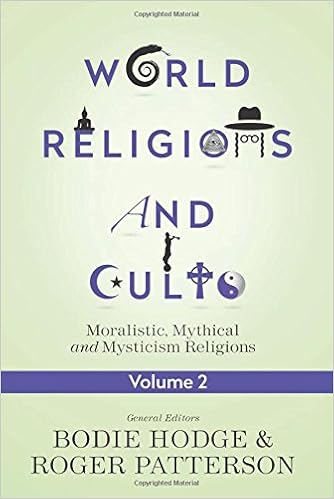
In Printed Form
Along with numerous other authors including Don Landis, Bodie Hodge and Roger Patterson, Timothy McCabe contributes analyses of various world religions and cults in this volume from Master Books.
Other Writings
"What would you say to members of Islamic State and al-Qaeda?"
Repent. You owe your lives to your Creator, and each and every sin you have committed is a moment you have stolen from Him. You can never get those moments back, so you can never pay the debt you owe Him. As long as you continue to try to earn His favor, you are guaranteed to fail. But there is hope. God Himself has provided a solution -- a way you can actually be right with Him. And it appears to me that the Qur'an itself points the way.
Continue reading...
"Isaiah 7:20 says the Lord is going to be a barber and shave the hair off our legs. Is there any reason for this random stuff?"
Isaiah 7:20 (NASB) In that day the Lord will shave with a razor, hired from regions beyond the Euphrates (that is, with the king of Assyria), the head and the hair of the legs; and it will also remove the beard. This does seem like an odd verse when pulled out of its full context, but reading the entire passage in historical context and in light of the law of Moses, specifically Leviticus 14, the meaning becomes apparent.
Continue reading...
"How do you know your god is good, and is not actually a satan making us think he is good?"
We know this because the contrary is impossible... We know that God necessarily exists because of the impossibility of the contrary. We also know that God is good and that He cannot deny Himself for the same reason. We know that we ought to behave in a certain way, and we know that we became aware of these oughts as a result of God's personal choice. In other words, He informed us of them.
Continue reading...